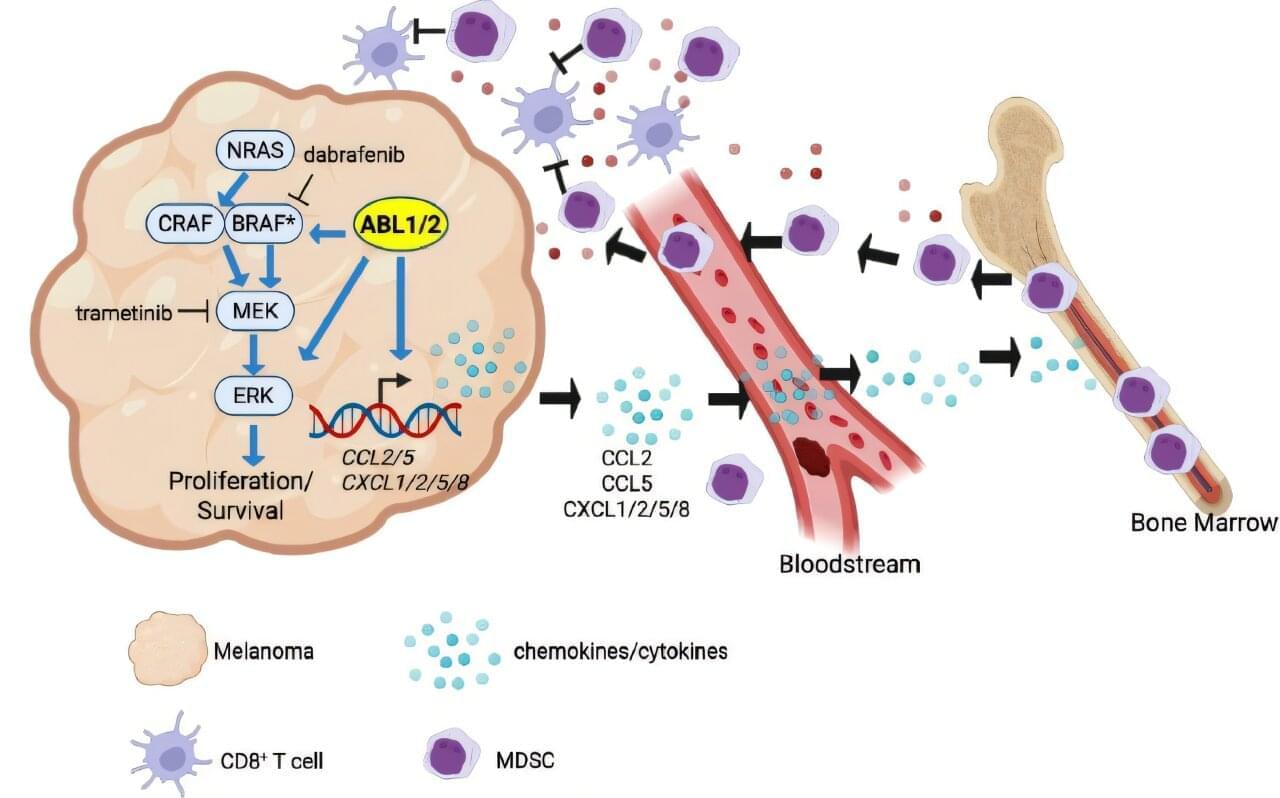
Melanoma is one of the most difficult cancers to treat due to its resistance to targeted drug therapies. But a new study from the University of Kentucky Markey Cancer Center shows that the cancer is playing offense as well as defense: In addition to forming resistance against the MAPK inhibitors that are commonly used to treat it, the cancer also actively suppresses the immune cells that would otherwise help eliminate it.
The study, published in Nature Communications, identified two cell proteins known as ABL1 and ABL2 as key drivers of both processes. These proteins help control cell functions such as growth, survival and communication with other cells, leading to tumor growth when they become overactive. In melanomas, they help the cells keep growing despite treatment by reactivating the growth signals. Meanwhile, they can also trigger a signal that recruits immune-suppressing cells while keeping cancer-fighting T cells at bay.
“These findings reveal that treatment resistance isn’t happening only inside the melanoma cell,” said UK College of Medicine researcher Rakshamani Tripathi, Ph.D. “ABL1 and ABL2 also help reshape the tumor’s immune environment, essentially creating another layer of protection that allows the cancer to survive therapy.”